
Why Viscose and Bamboo Silk Rugs Are So Difficult to Clean in South Florida
📖 12 minute read
Short answer: Viscose rugs — often marketed as bamboo silk, art silk, or rayon — are among the most beautiful yet delicate floor coverings found in luxury South Florida homes. Unlike wool or synthetic fibers, viscose becomes significantly weaker when wet, and excess moisture, aggressive cleaning, high alkalinity, improper drying, or even normal wear can permanently change how the fibers look.
South Florida’s year-round humidity adds another layer of difficulty, especially in seasonal condominiums left unoccupied for months. Professional cleaning is possible in many situations, but it requires careful inspection, fiber identification, moisture control, and realistic expectations about the rug’s existing condition.
At a Glance
- Often sold as Bamboo Silk, Art Silk, or Rayon
- Beautiful silk-like appearance
- Extremely moisture sensitive
- Loses strength when wet
- Can permanently change texture
- May develop cellulosic browning
- High humidity increases cleaning challenges
- Requires professional inspection before cleaning
What Is Viscose?
Viscose is a regenerated cellulose fiber. Although it begins with natural plant material such as wood pulp or bamboo, it’s chemically processed into a soft textile fiber. This process gives the material its characteristic silky appearance and smooth feel.
Because of its elegant sheen, viscose has become extremely popular in luxury interior design. Many high-end rugs sold today combine wool with viscose to create dramatic contrast between matte and reflective textures. Manufacturers may market these rugs under several different names, including:
- Bamboo Silk
- Bamboo Viscose
- Rayon
- Art Silk
- Artificial Silk
- Viscose
Although these names sound different, many share similar performance characteristics and cleaning concerns.
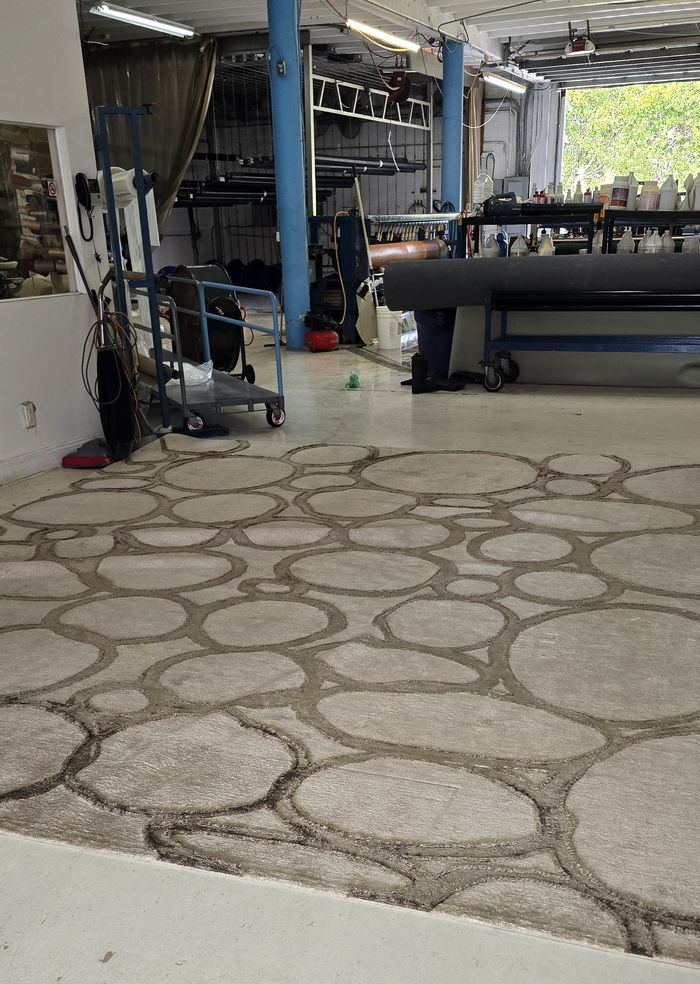
Why Interior Designers Love Viscose Rugs
Walk into a luxury condominium in Boca Raton, Delray Beach, Palm Beach, or Fort Lauderdale, and there’s a good chance you’ll find at least one viscose area rug. Designers appreciate these rugs because they offer:
- A luxurious silk-like shine
- Soft texture underfoot
- Modern contemporary appearance
- Excellent light reflection
- Beautiful neutral colors
- Lower cost than genuine silk
In bright South Florida homes with large windows, marble floors, and natural light, viscose creates an elegant visual effect that many homeowners love. Unfortunately, the characteristics that make viscose beautiful are often the same characteristics that make it difficult to maintain.
Why Viscose Rugs Are So Difficult to Clean
Cleaning a viscose rug is very different from cleaning a typical synthetic area rug or even a wool rug. Several characteristics of the fiber require special attention.
1. Viscose Becomes Weaker When Wet
One of the biggest differences between viscose and many other fibers is that its strength decreases significantly when it absorbs water. When wet, the fibers become more vulnerable to abrasion, aggressive brushing, excessive vacuuming, heavy foot traffic, and mechanical agitation. This means a cleaning process that’s perfectly safe for another rug could damage a viscose rug if not carefully controlled.
2. Fiber Swelling
When moisture enters the fibers, they expand. As the rug dries, those fibers may not return to their original position. The result may include uneven texture, flattened areas, loss of sheen, or directional appearance changes. Many homeowners believe the rug is still dirty when, in reality, the fibers are simply reflecting light differently after cleaning.
3. Cellulosic Browning
Cellulosic browning is one of the most common problems associated with cellulose-based fibers. If excessive moisture remains in the rug during drying, natural compounds within the fibers can migrate toward the surface, creating yellow or brown discoloration. High humidity slows drying and increases this risk.
4. Dye Migration
Luxury rugs often contain multiple colors and intricate patterns. When too much moisture is introduced, dyes may migrate into adjacent fibers. Although not every viscose rug experiences dye migration, proper testing should always be performed before cleaning.
5. Permanent Texture Distortion
Perhaps the most misunderstood characteristic of viscose is that a rug can become perfectly clean while still looking different. This happens because the fibers no longer reflect light uniformly — depending on the direction you view the rug, certain areas may appear darker or lighter even though they’re completely clean. This optical effect is often mistaken for remaining soil.
6. Shedding
Many viscose rugs naturally shed to some degree. However, excessive shedding may result from normal aging, heavy foot traffic, UV exposure, routine vacuuming, previous cleanings, manufacturing characteristics, or fiber deterioration over time. Cleaning does not necessarily cause excessive shedding, but a deteriorated rug may continue shedding after cleaning because the fibers were already weakened.
The South Florida Challenge
South Florida presents conditions that make viscose rug care even more complicated, including high year-round humidity, seasonal homes left vacant for months, air-conditioning failures, salt air near the coast, large sliding glass doors, intense sunlight, and high indoor moisture during summer.
Many seasonal residents close their condominium for several months. During that time, humidity levels can fluctuate dramatically if the HVAC system isn’t operating properly. Even without visible water damage, elevated humidity may contribute to odors, slow drying, and changes in delicate cellulose fibers.
Not sure what fiber your rug actually is, or whether it’s safe to clean? We’ll inspect it before recommending anything.
Request a Rug InspectionWhy Vacuuming Matters
One of the biggest misconceptions is that only cleaning affects a viscose rug. In reality, routine vacuuming can also influence its appearance. Even vacuums without a rotating beater bar may place stress on weakened fibers if suction is too aggressive, the rug is vacuumed excessively, the fibers are already deteriorating, or the rug has significant foot traffic. Proper vacuum selection and technique are important components of long-term rug care.
Common Homeowner Mistakes
- Renting a carpet cleaning machine
- Using excessive water
- Scrubbing stains aggressively
- Applying bleach
- Using high-pH spot removers
- Pressure washing
- Steam mops
- Allowing the rug to dry slowly
- Ignoring fiber identification
What works on a polyester rug can permanently alter a viscose rug.
Professional Inspection Is Essential
Before recommending any cleaning method, a professional should evaluate fiber identification, construction, dye stability, existing wear, shedding, previous repairs, water damage, odors, stains, and backing condition. No two viscose rugs behave exactly the same.
Expert Insight from Blue Steam
Over the years, we’ve inspected luxury viscose and bamboo-silk rugs throughout South Florida, particularly in seasonal condominiums and high-end residences.
One pattern we frequently see is homeowners assuming that a recent cleaning caused deterioration, when in reality the rug had already been affected by a combination of humidity, sunlight, normal foot traffic, routine vacuuming, and the inherent fragility of viscose fibers.
Professional cleaning may reveal existing wear that was previously hidden by soil, but it does not necessarily create that wear. Every rug should be evaluated individually, and owners should understand that preservation — not perfection — is often the realistic goal when caring for delicate cellulose-based rugs.
Frequently Asked Questions
Can a viscose rug be steam cleaned?
Some viscose rugs can be professionally cleaned using carefully controlled methods, but the cleaning process should always begin with fiber identification and testing. The safest approach depends on the rug’s construction, condition, dyes, and previous wear.
Why does my rug look darker after cleaning?
Changes in fiber direction or texture can alter how light reflects from the surface. The rug may be clean even though it appears different from certain viewing angles.
Can humidity damage a viscose rug?
Prolonged elevated humidity can contribute to slow drying, odors, and increased risk of discoloration or fiber-related issues, particularly in seasonal residences.
Why is my rug shedding?
Some shedding is normal. Excessive shedding may result from age, wear, sunlight, vacuuming, manufacturing characteristics, or deterioration of the fibers over time.
Can browning be removed?
In some cases, discoloration can be improved, but results depend on the cause and severity. Permanent fiber changes cannot always be reversed.
Final Thoughts
Viscose and bamboo-silk rugs are among the most elegant floor coverings available, but they require informed care and realistic expectations. South Florida’s climate adds another layer of complexity, making inspection, proper maintenance, and careful cleaning especially important.
Understanding how these fibers react to moisture, humidity, wear, and cleaning allows homeowners to make better decisions that can help preserve the appearance and longevity of their investment.
Related Blue Steam Services
Sources
- IICRC S100 Standard for Professional Cleaning of Textile Floor Coverings
- Carpet and Rug Institute (CRI) Cleaning Standards
- EPA guidance on indoor moisture and humidity
- Manufacturer care recommendations for viscose, rayon, and cellulose-based rugs